Would You Raise Your Hand?
Imagine five Americans elected from every state.
Not state legislators. Not members of Congress. Not governors. Not party officials. Ordinary people. People who step forward because they believe the country is not simply something to complain about, inherit, or watch from a distance, but something to help build.

A teacher from Minnesota. A farmer from Iowa. A nurse from Georgia. A small business owner from Arizona. A veteran from Pennsylvania. A college student from California. A retired autoworker from Michigan. A tribal leader. A public defender. A parent. A pastor. A librarian. A mayor from a town most Americans have never heard of.
Two hundred and fifty people, chosen from across the country, brought together for one extraordinary purpose: To help write a renewed American Constitution.
Not a new Constitution in the sense of starting from nothing. Not a rejection of the old one. Not an act of erasure. The existing Constitution would be the foundation. The question would not be whether to abandon it, but whether we are capable of returning to it seriously enough to ask what should be preserved, what should be clarified, what should be repaired, and what should be added.
That distinction matters.
There is something shallow about the idea that reverence requires paralysis. We can honor a constitutional tradition without pretending that every structure still functions as it should. We can preserve a foundation while also recognizing that foundations support living institutions, and living institutions require care. Houses are repaired. Cities are redesigned. Laws are amended. Systems are updated. A republic, too, must sometimes ask whether its structure still serves its people.
The idea gives me goosebumps.
Not because it would be easy. It would not be. Not because it would be tidy. It would be messy, contentious, emotional, and probably exhausting. But because there is something almost unimaginable now about Americans being invited into a civic project that is constructive rather than destructive.
So much of our public life feels reactive. We vote against candidates. We organize against policies. We argue against court decisions. We watch institutions strain and fray. We are constantly being asked to be angry, afraid, suspicious, loyal, outraged, or entertained.
But how often are we asked to imagine? How often are Americans invited to think together, across differences, about what kind of republic we actually want to live in?
That is what makes the Italian example so powerful.
Italy’s Constituent Assembly
In 1946, Italy was not simply changing leaders. It was changing legal orders. After fascism, monarchy, war, occupation, and national rupture, Italians were asked to decide in a national referendum held on June 2, 1946 whether the country would remain a monarchy or become a republic. They chose a republic. But the more remarkable act came with what followed. On that same day of June 2, the Italian people elected a Constituent Assembly, a group of 556 Italians charged with giving legal form to that new republican future.

That is the part that stays with me.
The Constituent Assembly was not merely asked to produce political slogans or a symbolic statement of national healing. It had to build a constitutional architecture. It had to decide where sovereignty would live, how power would be divided, what rights would be protected, what duties citizens and institutions would owe, and what limits would bind the new republic so that the failures of the old order would not simply return in a different form.
That is law at its most serious.
The Italian Constitution did not treat democracy as a mood or a campaign promise. It translated democratic aspiration into legal structure. It began with foundational commitments: that Italy would be a democratic republic; that sovereignty belonged to the people; that rights were not gifts from the state; that equality required more than formal words; that the republic itself had obligations to remove obstacles that prevent full participation in political, economic, and social life.
That is what constitutional drafting can do when it is at its best. It can take a country’s memory, fear, hope, and moral clarity and turn them into institutions.
The United States is not postwar Italy. The comparison is not exact, and it does not need to be. The power of the analogy is not procedural. It is imaginative.
Italy had a moment in which the people were asked to participate in the re-founding of public life. What an extraordinary thing. What a terrifying thing. What a privilege.
Imagine being one of the people chosen to help write the constitutional framework for a country. Imagine the seriousness of that responsibility. Imagine knowing that future generations might live under words you helped shape. Imagine having to think not only about what your side wants now, but about what a country needs in order to endure.
That is the part we seem to have lost.
Americans talk about the Constitution constantly. We quote it, litigate it, praise it, distort it, defend it, weaponize it, and invoke it. But we rarely talk about it as a shared civic project. It is treated either as sacred text beyond ordinary democratic imagination, or as a battlefield for political victory.
What would happen if we treated it instead as a foundation entrusted to us?
Our Renewed Constitutional Project
A renewed constitutional process could begin with that premise. Keep the foundation. Preserve the achievements. Respect the architecture. But invite the country to examine the structure honestly.
What parts still work?
What parts are under strain?
What assumptions no longer hold?
What rights should be made explicit?
What powers need clearer limits?
What duties do citizens owe one another?
What responsibilities should belong to the federal government, to the states, to local communities, and to the people themselves?
What should no government be allowed to do?
What democratic practices need protection not merely by custom, but by constitutional design?
This would not have to begin with politicians. In fact, perhaps it should not.
The American Constituent Assembly

Imagine a national citizens’ assembly: five people elected from every state, not because they already hold power, but because they are willing to do the hard work of constitutional thinking. They would not arrive as experts in everything. No one is. But they would arrive as citizens. They would listen. They would study. They would hear from historians, lawyers, judges, local officials, tribal governments, teachers, workers, business owners, immigrants, veterans, students, parents, and people whose lives are shaped by government decisions in ways that rarely make it into constitutional theory.
They would ask questions in public. They would debate in public. They would receive testimony. They would read history. They would confront tradeoffs. They would have to move beyond slogans. And the rest of the country would not simply watch.
There should also be a national suggestion box.
Everyone Gets a Voice
We already have public comment periods for agency regulations. When a federal agency proposes a rule, people can submit comments. Businesses write in. Advocacy groups write in. Experts write in. Ordinary citizens can write in. The system is imperfect, but the basic idea is profound: before the government acts, the public should have a chance to speak.
Why not something like that for constitutional renewal and our constituent assembly?
Imagine a public website where Americans could submit constitutional ideas. Not just complaints. Not just partisan demands. Ideas. Proposals. Explanations. Stories. Warnings. Hopes.
What would you preserve?
What would you revise?
What would you add?
What should be untouchable?
What has experience taught us?
What has history warned us about?
What should future generations not have to fight all over again?
The submissions would become a national archive of civic imagination. Some would be brilliant. Some would be strange. Some would be angry. Some would be naive. Some would be profound. That is democracy. The point is not that every idea would become law. The point is that people would be asked. That alone would change something.
Because to be asked is to be treated as responsible.
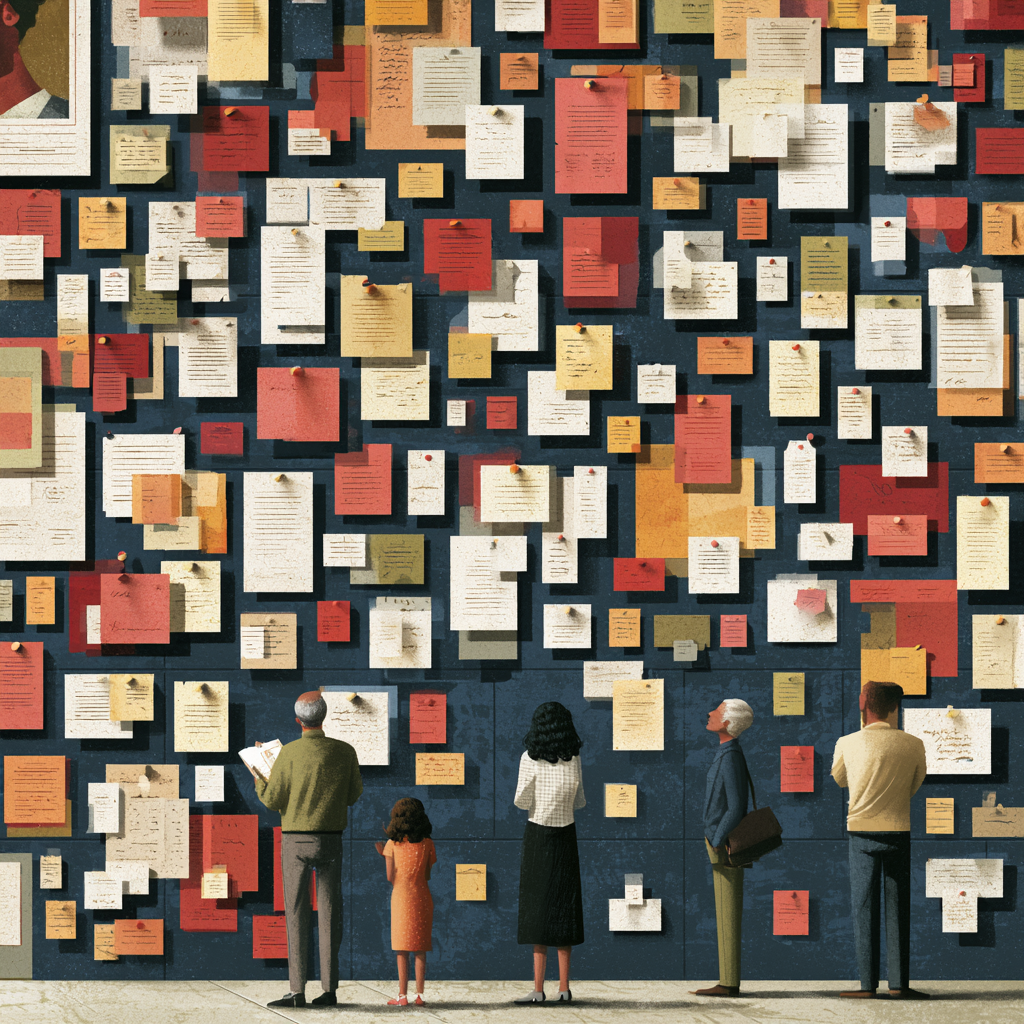
One of the quiet failures of modern American civic life is that citizens are constantly mobilized but rarely trusted. We are targeted as voters, donors, viewers, consumers, demographics, factions, and data points. We are asked to choose between prepackaged options. We are asked to react. We are asked to be loyal to teams. But we are not often asked to deliberate.
And too often, we are spoken down to, as if ordinary people cannot understand serious public questions, as if constitutional structure, democratic reform, or the design of government are simply too complicated for citizens with jobs, families, bills, and crowded lives. But that assumption is itself a civic failure. People may not have endless time, but they have judgment. They have experience. They may not speak in institutional jargon, but they know when the institutions are failing them.
A constitutional renewal process would require a different kind of citizenship. It would ask people to think beyond the next election. It would ask them to separate what they want from what a system needs. It would ask them to imagine rules they would accept even when their preferred side loses power.
That is the discipline of constitutional thinking. It is not merely asking, “How do we win?” It is asking, “What rules would make self-government possible even when we disagree?”
At the end of such a process, the proposed renewed Constitution could be put to the people in a national referendum. Not as a symbolic poll, but as a direct act of democratic consent. A country that begins with “We the People” could ask the people, openly and nationally, whether they accept the revised constitutional compact.
That process does not exist now. But that is precisely the point. Constitutional design is not fate. Institutions are made. Procedures are made. They can be amended, created, and reimagined. The more important question is not whether such a process is currently available. The more important question is whether we still have the civic courage to imagine it.
Would Americans be capable of doing this seriously? I do not know.
Maybe we are too divided. Maybe we are too suspicious. Maybe too many people would try to hijack the process for short-term political gain. Maybe the loudest voices would drown out the most thoughtful ones. Maybe the whole thing would collapse under the weight of our mistrust.
But maybe not.
Maybe there are more people than we think who are tired of being angry. Maybe there are more people than we think who understand that preserving a republic requires more than nostalgia. Maybe there are more people than we think who would take the assignment seriously if the country took them seriously first. That is the part worth holding onto.
Imagine receiving the call.
What If You Raised Your Hand?
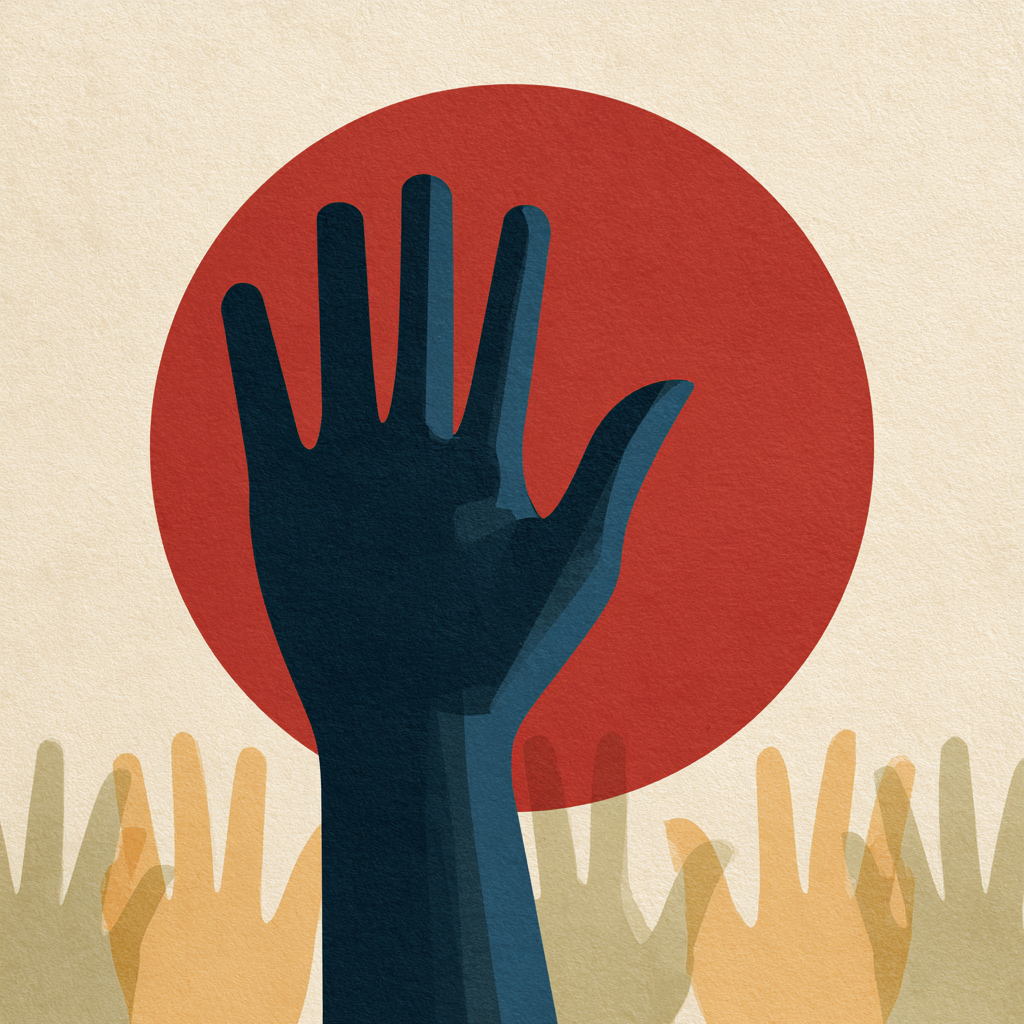
Your state has elected you as one of its citizen-delegates. You are going to sit with people from every region of the country and help think through the future of the American constitutional order. You will not get everything you want. You will have to listen to people whose lives and assumptions are different from yours. You will have to defend your ideas with more than outrage. You will have to decide what is essential, what is negotiable, and what belongs not only to you, but to the country.
Would you raise your hand?
Would you say yes?
And if there were a national suggestion box for the country and our renewed constitution, what would you write?
Not as a partisan. Not as a spectator. Not as someone waiting for someone else to fix it. As a citizen.
What would you preserve?
What would you repair?
What would you add?
What would you ask future generations to remember?
A republic is not only something we inherit. It is something we choose, protect, revise, and recommit to.
The question is whether we still believe we can do that together.